
Electric vehicles have changed the way people think about driving, maintenance, and roadside assistance. But when an EV runs out of power, gets involved in an accident, or develops a mechanical problem, towing it is not always the same as towing a conventional gasoline-powered car.
EV towing requires the right equipment and procedures because electric vehicles use high-voltage battery systems, regenerative braking, electric motors, and vehicle-specific towing instructions. Using an inappropriate towing method can potentially damage the vehicle.
Whether you own a Tesla, Ford Mustang Mach-E, Hyundai Ioniq 5, Kia EV6, Rivian, or another electric vehicle, understanding the basics of safe towing can help you make better decisions during an emergency.
What Is EV Towing?
EV towing refers to the process of transporting an electric vehicle using a tow truck or other recovery equipment.
Although an electric vehicle may look similar to a traditional car, its drivetrain works differently. Instead of an internal combustion engine and conventional transmission, most EVs use an electric motor powered by a high-voltage battery pack.
That difference matters when the vehicle needs to be moved without its own power.
A towing professional should check the vehicle’s manufacturer’s instructions before deciding how it should be transported. In many situations, a flatbed tow truck is the preferred option because all four wheels can remain off the road.
Why Is Towing an EV Different?
The biggest reason is the electric drivetrain.
Traditional vehicles are generally designed with towing procedures that allow certain wheels to rotate while the vehicle is being transported. EVs can have different requirements because their electric motors and related components are connected to the wheels.
Allowing the driven wheels to rotate incorrectly may cause damage to drivetrain components in some EV models.
There is also the high-voltage battery to consider. The battery pack is normally protected within the vehicle’s structure, but accident-damaged EVs require additional caution.
This is why a roadside technician should not assume that an EV can be handled exactly like a gasoline-powered vehicle.
Flatbed Towing for Electric Vehicles
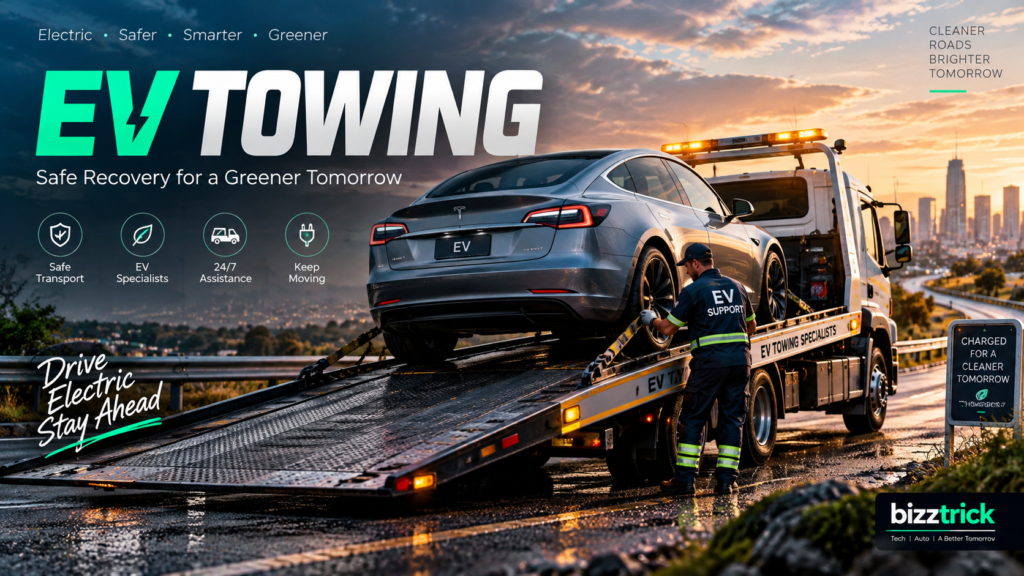
A flatbed tow truck is often one of the safest options for transporting an EV.
With a flatbed, the vehicle is loaded onto a platform and secured so that its wheels do not need to rotate during transportation.
Benefits of flatbed EV towing include:
- All four wheels can remain off the ground
- Reduced drivetrain movement
- Lower risk of tire or wheel damage
- Suitable for many EV breakdown situations
- Useful for long-distance transportation
- Better control when moving a damaged vehicle
However, even flatbed towing needs to be performed correctly. The recovery operator should use appropriate loading equipment and follow the manufacturer’s instructions.
Can You Tow an EV With Two Wheels on the Ground?
This depends on the specific vehicle.
Some EVs have strict requirements against towing with their drive wheels on the ground. Others may provide limited procedures for moving the vehicle under particular circumstances.
Therefore, there is no universal answer for every electric car.
Before attempting to move an EV, check the owner’s manual or manufacturer-approved towing instructions. If you are unsure, contacting professional EV roadside assistance is safer than experimenting with a towing method.
What Happens When an EV Runs Out of Battery?
Running out of charge is one of the most common reasons an EV owner may need roadside assistance.
An EV that reaches a very low state of charge may stop moving just like a gasoline vehicle with an empty fuel tank. However, the solution is different.
Depending on the location, roadside assistance may be able to provide mobile charging or transport the vehicle to a charging station.
If charging assistance is unavailable, a tow truck may be required.
What should you do?
- Move to a safe location if the vehicle can still be driven.
- Turn on hazard lights if necessary.
- Avoid stopping in an unsafe traffic area.
- Contact roadside assistance.
- Tell the dispatcher that the vehicle is electric.
- Provide the exact EV model if possible.
- Follow the manufacturer’s emergency instructions.
Providing the correct vehicle information helps the towing company send appropriate equipment.
EV Towing After an Accident
Accident recovery requires additional caution.
An EV involved in a serious collision may have damage that is not immediately visible. Since the high-voltage battery can be located beneath the passenger compartment, recovery personnel need to consider potential battery damage.
Warning signs can include:
- Visible battery or underbody damage
- Smoke
- Unusual heat
- Sparks
- Hissing or popping sounds
- Damaged high-voltage components
- Warning messages from the vehicle
If an EV has suffered significant damage, do not attempt to inspect or repair high-voltage components yourself.
Move away from the vehicle when appropriate and contact emergency services or trained professionals.
Do EVs Need Special Tow Trucks?
Not necessarily a completely different type of tow truck, but EV recovery often requires appropriate equipment and trained operators.
A flatbed truck can be used for many EVs, while wheel-lift equipment or dollies may sometimes be required according to the vehicle’s specific towing instructions.
When calling a towing company, mention:
“I have an electric vehicle.”
Then provide the make and model.
This small detail can help the dispatcher determine which recovery equipment and procedures are appropriate.
How to Prepare Your EV for Towing
If your EV is still operational, preparation can make the towing process easier.
1. Check the Owner’s Manual
Look for the emergency towing or vehicle recovery section. Manufacturers often provide detailed instructions about how the vehicle should be transported.
2. Put the Vehicle in the Correct Mode
Some vehicles have a special transport, neutral, or tow mode. Follow the manufacturer’s instructions rather than selecting settings randomly.
3. Remove Personal Items
Before transportation, remove valuables and loose items from the cabin if it is safe to do so.
4. Tell the Tow Operator About the EV
Never assume the dispatcher already knows that the vehicle is electric.
5. Explain Any Damage
Mention flat tires, accident damage, locked wheels, or other problems that could affect loading.
Common EV Towing Mistakes to Avoid
A few mistakes can turn a simple breakdown into an expensive repair.
Ignoring the Manufacturer’s Instructions
Every EV is different. A towing method that works for one model may not be appropriate for another.
Using Improper Straps or Equipment
The vehicle needs to be secured using appropriate recovery equipment. Incorrect attachment points can cause damage.
Trying to Move a Severely Damaged EV
If the vehicle has been involved in a serious collision, avoid unnecessary handling.
Assuming “Neutral” Means It Can Be Towed Normally
Putting an EV into neutral does not automatically mean it is safe to tow long distances with its wheels rotating.
Waiting Until the Battery Is Completely Empty
Regularly charging your EV and monitoring range can reduce the chances of becoming stranded.
How Much Does EV Towing Cost?
The price of EV towing varies significantly depending on location, distance, vehicle type, time of day, and the complexity of the recovery.
Factors that can affect the price include:
- Distance to the destination
- Type of tow truck required
- Roadside assistance coverage
- Vehicle accessibility
- Accident recovery requirements
- After-hours service
- Long-distance transportation
- Additional recovery equipment
Some EV manufacturers and insurance providers include roadside assistance with certain vehicles or plans, so EV owners should check their coverage before paying for an independent service.
How to Choose an EV Towing Service
When searching for an electric vehicle towing company, don’t choose a provider based only on the cheapest price.
Look for a company that:
- Handles electric vehicles regularly
- Has suitable towing equipment
- Understands manufacturer towing procedures
- Offers flatbed transportation when required
- Provides transparent pricing
- Has positive customer reviews
- Can respond quickly in your area
You can also ask directly:
“Do you have experience towing my EV model?”
A professional company should be able to explain how it plans to recover and transport your vehicle.
EV Towing vs. Traditional Vehicle Towing
While both services involve moving a disabled vehicle, there are important differences.
| Feature | EV Towing | Traditional Vehicle Towing |
|---|---|---|
| Power source | High-voltage battery | Fuel-powered engine |
| Drivetrain | Electric motor | Internal combustion engine |
| Battery considerations | High-voltage system | Conventional 12V battery |
| Towing method | Often flatbed preferred | Depends on vehicle |
| Accident recovery | May require additional precautions | Standard recovery procedures |
| Technician knowledge | EV-specific training useful | Conventional towing knowledge |
The correct towing method ultimately depends on the individual vehicle.
EV Roadside Assistance: What Should You Keep in Your Car?
You don’t need to carry extensive towing equipment, but a few items can make roadside emergencies easier.
Consider keeping:
- Portable phone charger
- Emergency warning triangles
- Flashlight
- Basic first-aid kit
- Manufacturer roadside assistance information
- Insurance details
- Charging-network information
Most importantly, keep your phone charged enough to contact emergency or roadside assistance services.
The Future of EV Towing
As electric vehicles become more common, the towing industry is adapting.
More roadside assistance companies are training technicians to work around EV systems, while manufacturers continue developing emergency procedures for electric vehicles.
The growth of EV adoption also means towing operators increasingly need to understand high-voltage safety, battery-related risks, vehicle-specific recovery procedures, and appropriate transportation equipment.
For EV owners, this means choosing a towing company with relevant experience is becoming increasingly important.
Final Thoughts
EV towing isn’t simply traditional towing with an electric car. The vehicle’s electric drivetrain, high-voltage battery, and manufacturer-specific recovery procedures can affect how it should be moved.
For many situations, a properly equipped flatbed tow truck provides a practical solution, but the manufacturer’s instructions should always take priority.
If your EV breaks down, runs out of charge, or is involved in an accident, focus first on safety. Contact professional roadside assistance, clearly identify your vehicle as an EV, and make sure the recovery operator knows the exact make and model.
Taking these precautions can help prevent unnecessary damage and get you back on the road—or safely to a repair facility—as efficiently as possible.
Frequently Asked Questions About EV Towing
Can an electric vehicle be towed?
Yes. EVs can be transported by tow trucks, but the appropriate method depends on the vehicle model and the situation. Always follow the manufacturer’s towing instructions.
Is flatbed towing better for an EV?
A flatbed is often a preferred option because it allows all four wheels to remain off the road. However, the correct recovery method should be confirmed for the specific EV.
Can you tow an EV when its battery is dead?
Yes, but a completely discharged EV may need roadside charging or transportation to a suitable charging location. The towing method depends on the vehicle.
Can I tow an EV myself?
It’s generally better to use professional roadside assistance unless the manufacturer specifically provides a safe procedure for the situation. Incorrect towing can damage the vehicle.
Do EVs need special towing equipment?
Some EVs require specific recovery equipment or procedures. A professional towing company should know how to safely handle the vehicle or consult the manufacturer’s instructions.
What should I tell a towing company?
Tell the dispatcher that your vehicle is electric and provide its exact make and model. Also explain whether it has accident damage, a flat tire, a depleted battery, or another problem.