
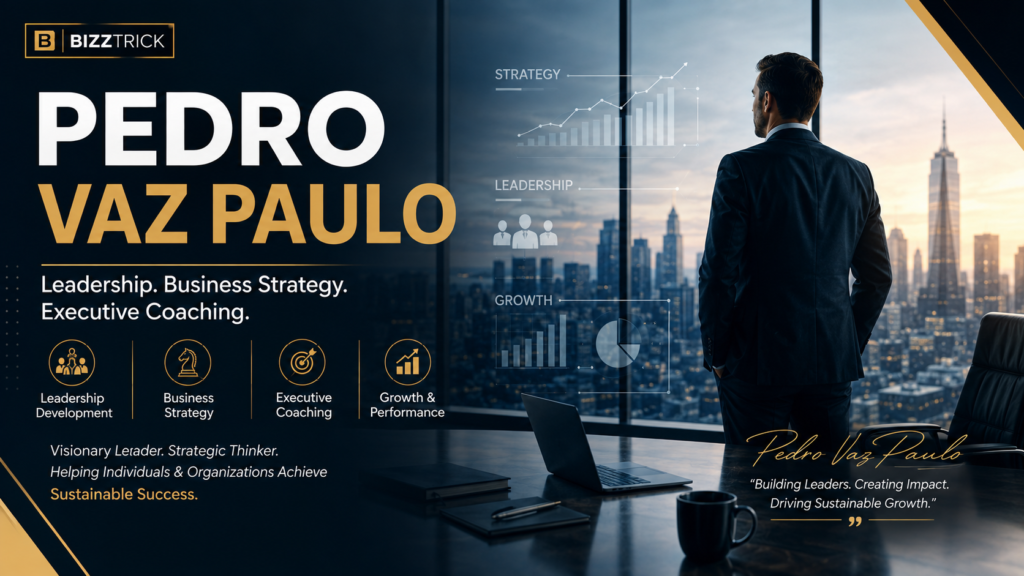

In today’s competitive business environment, organizations need more than great ideas—they need strategic leadership, smart decision-making, and continuous improvement. This is where Pedro Vaz Paulo has gained attention for his work in business strategy, executive coaching, and organizational development.
Whether you’re an entrepreneur, business owner, startup founder, or corporate executive, understanding Pedro Vaz Paulo’s leadership philosophy can provide valuable insights into building stronger teams, improving business performance, and achieving long-term success.
This guide explores who Pedro Vaz Paulo is, his business philosophy, coaching approach, leadership principles, and why professionals search for his insights.
Who Is Pedro Vaz Paulo?
Pedro Vaz Paulo is recognized for his work in business consulting, executive coaching, leadership development, and strategic planning. His professional approach focuses on helping leaders make informed decisions, improve organizational performance, and develop sustainable growth strategies.
Rather than relying on quick business fixes, his philosophy emphasizes long-term planning, measurable improvements, and people-centered leadership.
His work generally combines:
- Executive coaching
- Strategic business consulting
- Leadership development
- Organizational transformation
- Performance optimization
- Decision-making frameworks
- Business innovation
These areas are increasingly important as companies face changing technologies, global competition, and evolving customer expectations.
Why Is Pedro Vaz Paulo Popular?
Many professionals search for Pedro Vaz Paulo because they are interested in improving leadership effectiveness and business performance.
Some common reasons include:
- Learning better leadership techniques
- Understanding executive coaching
- Improving business strategy
- Building stronger organizational culture
- Enhancing decision-making
- Increasing operational efficiency
- Managing business growth successfully
As businesses become more complex, experienced consultants who combine leadership development with strategic planning continue to attract attention.
Pedro Vaz Paulo’s Leadership Philosophy
One recurring theme in Pedro Vaz Paulo’s approach is that successful organizations begin with effective leadership.
Instead of focusing solely on profits, modern leadership also requires:
- Clear communication
- Accountability
- Strategic thinking
- Continuous learning
- Employee development
- Adaptability
- Innovation
Strong leaders create environments where employees feel motivated, engaged, and aligned with organizational goals.
The Importance of Executive Coaching
What Is Executive Coaching?
Executive coaching is a structured process that helps leaders improve their professional performance through personalized guidance, feedback, and goal setting.
Rather than offering direct answers, an executive coach helps individuals develop the skills needed to solve challenges independently.
Benefits often include:
- Better decision-making
- Improved communication
- Higher confidence
- Enhanced leadership abilities
- Increased productivity
- Better conflict resolution
- Stronger emotional intelligence
These improvements often extend beyond the individual leader and positively influence the entire organization.
Business Strategy: A Core Area of Expertise
A successful business strategy provides direction and helps organizations allocate resources effectively.
Pedro Vaz Paulo’s strategic philosophy generally focuses on several key principles.
1. Understanding Business Objectives
Every successful organization begins with clearly defined goals.
Questions leaders should answer include:
- What are we trying to achieve?
- Who are our customers?
- What problems are we solving?
- What makes us different?
Without clear objectives, even talented teams can lose focus.
2. Market Analysis
Understanding competitors and customer behavior allows businesses to identify opportunities while reducing risks.
A comprehensive market analysis often examines:
- Industry trends
- Customer expectations
- Competitive positioning
- Market demand
- Emerging technologies
This information supports better strategic planning.
3. Operational Efficiency
Growth isn’t only about increasing revenue.
Successful organizations also improve efficiency by:
- Reducing waste
- Streamlining workflows
- Automating repetitive tasks
- Optimizing resources
- Improving internal communication
Small operational improvements often produce significant long-term results.
Leadership Development
Great leaders are developed through continuous learning rather than natural talent alone.
Leadership development typically includes improving:
Communication Skills
Leaders must communicate expectations clearly while actively listening to employees.
Emotional Intelligence
Understanding emotions helps leaders manage teams more effectively and build trust.
Problem-Solving
Business challenges require analytical thinking and structured decision-making.
Adaptability
Markets evolve quickly, making flexibility an essential leadership quality.
Organizational Transformation
Modern businesses frequently undergo significant changes due to:
- Digital transformation
- Artificial intelligence
- Remote work
- Market competition
- Customer expectations
- Economic uncertainty
Successful organizational transformation requires careful planning, employee engagement, and consistent leadership.
Change initiatives are more likely to succeed when leaders communicate openly and involve employees throughout the process.
Innovation and Continuous Improvement
Innovation isn’t limited to technology companies.
Every organization can innovate by improving:
- Customer experience
- Internal processes
- Products
- Services
- Marketing strategies
- Team collaboration
Continuous improvement encourages businesses to evaluate current practices regularly and identify opportunities for incremental progress.
Decision-Making Frameworks
Effective decision-making balances experience with evidence.
Business leaders often consider:
- Financial impact
- Customer outcomes
- Risk assessment
- Available resources
- Long-term objectives
- Organizational values
Structured decision-making reduces uncertainty while supporting consistent business growth.
Building High-Performance Teams
Strong organizations depend on motivated teams rather than individual talent alone.
Leaders can improve team performance by:
- Setting clear expectations
- Encouraging collaboration
- Recognizing achievements
- Providing professional development
- Creating psychological safety
- Supporting innovation
Employees who understand organizational goals are more likely to contribute meaningful ideas and remain engaged.
Common Business Challenges Leaders Face
Organizations frequently encounter obstacles such as:
Rapid Market Changes
Customer preferences evolve quickly, requiring businesses to remain flexible.
Talent Retention
Retaining skilled employees has become increasingly important for long-term success.
Technology Adoption
Implementing new technologies requires investment, planning, and employee training.
Strategic Alignment
Departments perform better when everyone works toward shared objectives.
Leadership plays a crucial role in addressing each of these challenges.
Lessons Businesses Can Learn
Several practical lessons emerge from modern leadership and consulting practices:
- Think strategically rather than reactively.
- Invest in leadership development.
- Prioritize clear communication.
- Encourage continuous learning.
- Build adaptable organizational cultures.
- Measure performance consistently.
- Focus on sustainable growth instead of short-term gains.
These principles remain relevant across startups, small businesses, and large enterprises.
Why Leadership Matters More Than Ever
Technology continues to reshape industries, but successful organizations still rely on capable leaders who inspire people, solve problems, and make informed decisions.
Leadership today extends beyond managing operations—it involves creating vision, developing talent, fostering innovation, and guiding organizations through uncertainty.
Professionals who invest in these skills are better positioned to navigate future business challenges.
Final Thoughts
Pedro Vaz Paulo is associated with strategic leadership, executive coaching, and business consulting aimed at helping organizations improve performance and develop effective leaders. His approach highlights the importance of long-term planning, continuous improvement, and people-focused leadership.
Whether you’re managing a startup, leading a growing business, or overseeing a large organization, the principles discussed in this guide—strategic thinking, effective communication, leadership development, and operational excellence—can contribute to stronger decision-making and sustainable success.
Instead of pursuing short-term results, businesses that consistently invest in leadership, employee development, and strategic planning are often better equipped to adapt to change and achieve lasting growth.